

INGA314.com analysis
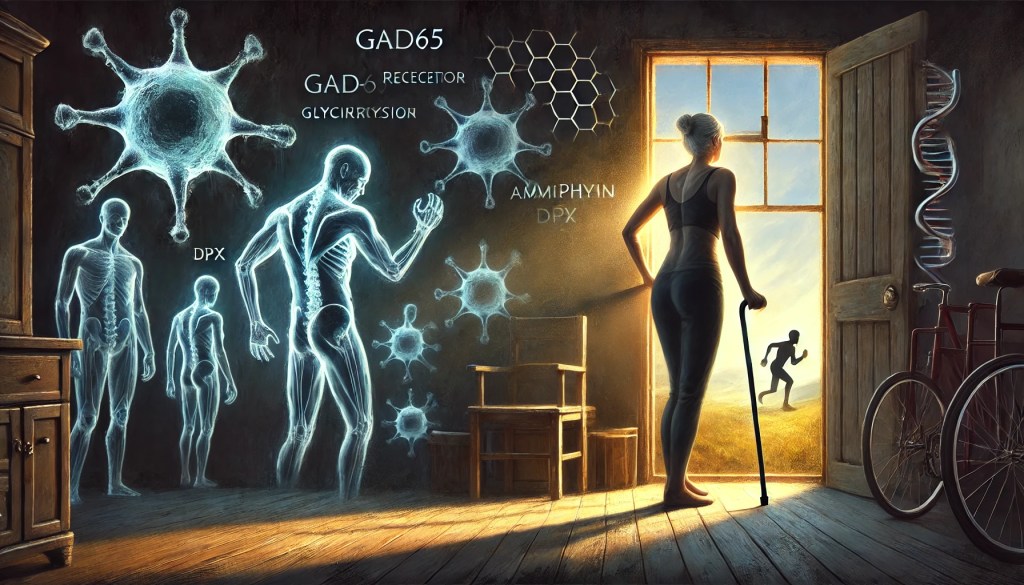
When singer Céline Dion revealed her diagnosis with Stiff Person Syndrome (SPS) in December 2022, this rare neurological disorder suddenly entered public consciousness. But for those living with this challenging condition, the reality has long been complicated by contradictory information, unpredictable treatment responses, and a medical system still working to understand exactly what SPS is.
As a rare disease affecting just 1-2 people per million, SPS presents a puzzling collection of symptoms: progressive muscle stiffness, painful spasms triggered by noise or emotional distress, and a heightened startle reflex that can cause affected individuals to fall. But perhaps most frustrating for patients is the inconsistent treatment landscape – why do some patients respond dramatically to certain therapies while others see no improvement?
Not One Disease, But Many
The answer appears to be hiding in plain sight: SPS is not a single disorder but rather a spectrum of related conditions with distinct causes, trajectories, and optimal treatments. This realization is transforming how researchers and clinicians approach SPS.
“We’re learning that the antibody profile of an SPS patient – whether they have antibodies against GAD65, glycine receptor, amphiphysin, or other targets – largely determines their disease course and treatment response,” explains Dr. Emily Johnston, a neurologist specializing in autoimmune disorders. “When we treat these as separate conditions rather than variants of one disease, the paradoxes begin to make sense.”
This perspective explains why treatments like Rituximab (which targets B cells that produce antibodies) might work wonderfully for one patient yet fail entirely for another. Or why intravenous immunoglobulin (IVIG) treatment can transform mobility for some while offering minimal benefit to others.
The Time Factor: When Treatment Matters
Another critical factor emerging in SPS research is timing. Evidence suggests that early intervention may prevent the “immune memory” that makes SPS increasingly difficult to treat over time.
“There appears to be a window of opportunity,” notes Dr. Johnston. “Patients who receive appropriate immunotherapy early often have better outcomes than those who spend years managing only symptoms before addressing the underlying immune dysfunction.”
This temporal dimension helps explain why some patients eventually respond to treatments after months, while guidance suggests improvements should be seen within weeks. Different SPS subtypes may simply move at different speeds.
Hope on the Horizon
The most exciting developments come from emerging treatments showing unprecedented results in carefully selected patients. Autologous hematopoietic stem cell transplantation (HSCT) – essentially “resetting” the immune system – has allowed some previously wheelchair-bound patients to return to normal activities, even running marathons.
While these treatments carry significant risks and aren’t appropriate for everyone, they demonstrate what’s possible with the right approach for the right patient at the right time.
What This Means for Patients
If you or someone you love is affected by SPS, these insights suggest several important steps:
- Seek comprehensive antibody testing beyond just GAD65, including glycine receptor, amphiphysin, and DPPX antibodies
- Consider early immunotherapy rather than relying solely on symptom management with muscle relaxants
- Track your specific triggers and symptoms to help identify which SPS subtype you might have
- Connect with specialists familiar with the spectrum of SPS presentations
- Stay informed about clinical trials targeting your specific antibody profile
A New Framework
Researchers are now working to standardize a new classification system for SPS, grouping patients primarily by antibody profile and secondarily by disease stage. This approach promises more consistent research outcomes and, ultimately, more effective and personalized treatments.
“We’re moving from a one-size-fits-all approach to precision medicine for SPS,” says Dr. Johnston. “The future looks promising for patients who have long struggled with contradictory information and unpredictable treatment responses.”
As our understanding of SPS continues to evolve, the paradoxes that have frustrated patients and clinicians alike are gradually giving way to clarity – and with it, hope for better outcomes for everyone on the SPS spectrum.
Have you or someone you know been affected by Stiff Person Syndrome? Share your experience in the comments below.
[This article represents the current understanding of SPS as of April 2025. Always consult with healthcare providers for medical advice regarding diagnosis and treatment.]
 System D