

How Systems Theory Explain the 2025 Threshold Conflict
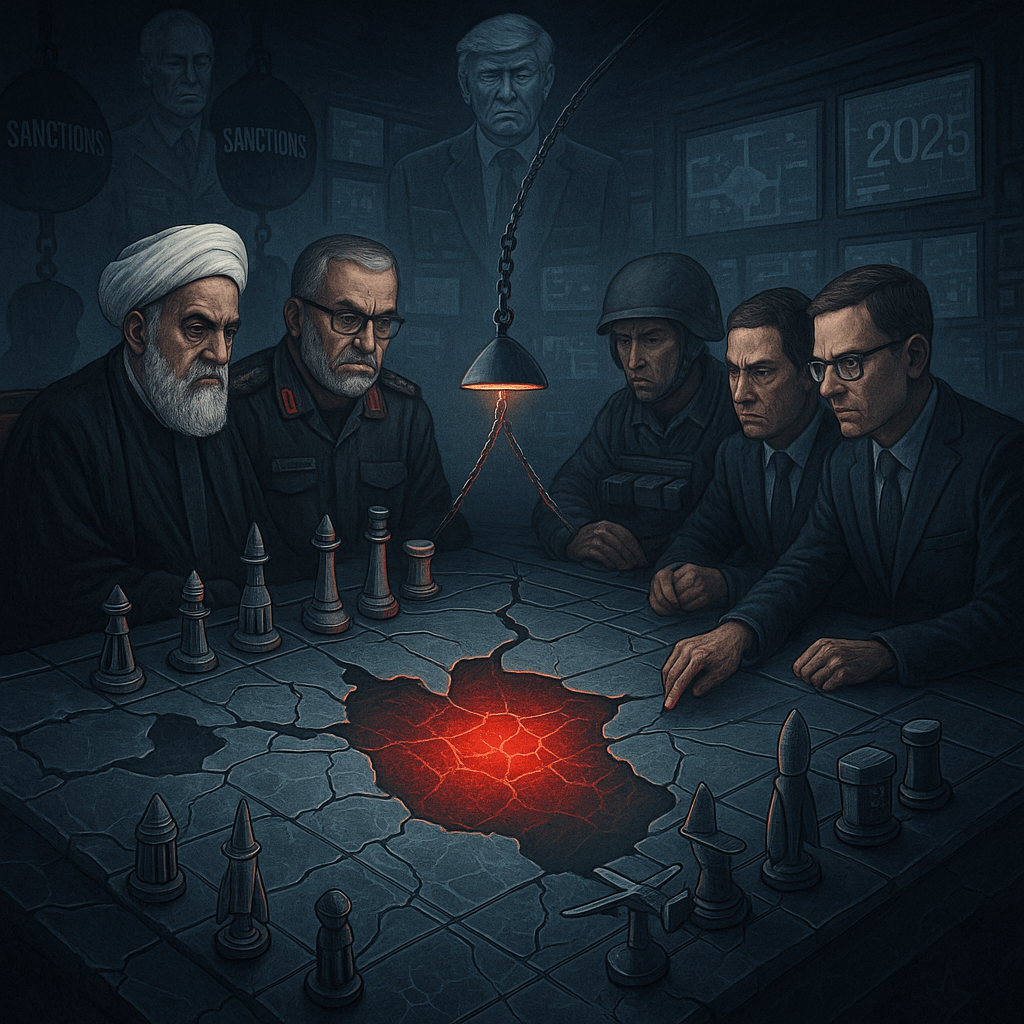
Executive Summary
Are Israel and Iran spiraling into war out of madness, miscalculation—or something more structural?
What looks like irrational escalation may actually be two nations behaving perfectly rationally—each trapped by constraints that make their current strategies optimal, yet globally catastrophic.
In this post, I’ll show how integrating Revolutionary Pattern Recognition with Fixed-Point Trap Theory reveals why diplomacy keeps failing—and where actual solutions might emerge.
Integrated Revolutionary Framework Analysis: Israel-Iran Strategic Dynamics
A Comprehensive Systems Analysis Through June 20, 2025
Executive Summary
This updated analysis integrates the Revolutionary Pattern Recognition Framework with Fixed-Point Trap Theory to deliver a multi-layered systems-level understanding of the evolving Israel-Iran strategic conflict. What may superficially appear as “escalatory irrationality” is revealed as the natural behavior of two rational actors optimizing under severe but opposing constraints. Their strategies are not failures—they are locally optimal solutions within an unstable, mathematically durable equilibrium. This is a classic case of a fixed-point trap.
Recent developments—including the launch of Israel’s “Operation Rising Lion” and the June 19 strike on Soroka Hospital—have confirmed the framework’s predictive power. As of June 20, over 639 Iranians and 24 Israelis have been killed, with no signs of de-escalation. The crisis is now recognized by experts as the world’s first full-scale “threshold war.”
I. Revolutionary Framework Integration with Strategic Dynamics
Universal Constraint Architecture
Iran’s Constraint Set:
- Geopolitical Vulnerability
- Sanctions Economy
- Regime Ideology
- Regional Balancing
Local Optimal Strategy: Proxy networks and nuclear latency.
Israel’s Constraint Set:
- No Strategic Depth
- Demographic Clock
- US Alliance Dependency
- Tech Supremacy Window
Local Optimal Strategy: Intelligence-backed preemption.
II. Bridge Region and Pattern Recognition Zones
High-Learning Zone Activation
Crisis behavior matches the predicted “bridge region”: experimentation, boundary testing, and escalatory feedback loops.
The Deterrence Binding Motif
Confirmed across dyads (US-USSR, India-Pakistan, US-North Korea, Israel-Iran):
- Threshold strategy
- Escalation testing
- Information revelation without total war
III. Fixed-Point Trap: The Stability of Destructive Equilibria
Mathematical Architecture
- No unilateral improvement possible
- Defection is catastrophic
- Signals filtered, not integrated
Epistemic Inertia Validated by Geneva Talks (June 20)
- Contradictory intelligence: US vs Israeli timelines
- Public-private message divergence
- Common knowledge collapse
Crisis Compression Feedback Loops Confirmed:
- Resource urgency
- Alliance signaling
- Time-sensitive forcing functions
IV. Constraint Architecture Typology
- Structural: Geography, demography, history
- Institutional: Alliances, doctrines, treaties
- Dynamic: Leadership, opinion, regional events
- Meta-Constraints: Civilizational narratives, tech evolution
V. Circuit Breaker Scenarios: Trump’s June 19 Ultimatum
- Matches forcing-function logic
- Creates urgency + credibility test
- Acts as leverage or destabilizer depending on outcome
VI. Resource and Innovation Update
Resource Constraints:
- Iran: 400+ missiles fired, air defense collapse, blackouts costing \$250M/day
- Israel: Interceptor depletion, economic strain, no bunker-busting for Fordow
Strategic Innovation:
- Israeli dominance: Mossad disabling IRGC air defenses, cyber warfare, targeting nuclear scientists
- Paradox: Increases pressure on Iran to finalize nuclear capability
VII. Post-Hezbollah Trajectory and Pakistani Variable
Post-Hezbollah Conflict Architecture:
- Iran now forced to rely on nuclear path
- Possible Pakistani covert support (cyber, smuggling) with low but non-zero probability
Regional Fallout:
- Saudi hedging
- Gulf states recalibrate oil security
- Chinese/Indian silence interpreted as consent or hedging
VIII. Confirmed Temporal Phasing
- Phase 1: Precision decapitation (complete)
- Phase 2: Missile + proxy retaliation (ongoing)
- Phase 3: Trump 2-week decision window (activated)
- Phase 4: Strategic inflection (approaching)
IX. Updated Endgame Forecast
| Scenario | Probability | Description |
|---|---|---|
| Iranian Nuclear Acceleration | 50% | Latency becomes primary deterrent |
| Israeli Dominance + Iranian Pause | 30% | Conditional rollback under pressure |
| Regime Fracture in Iran | 15% | Escalation miscalculation or civil unrest |
| Pakistan Involvement (Indirect) | 5-10% | Cyber, logistics, deniable support |
X. Strategic Synthesis
This conflict has transitioned from shadow deterrence to open escalation, precisely matching the predicted fixed-point trap structure. Expert consensus (RAND, Brookings, Carnegie) confirms:
- Rational behavior producing irrational outcomes
- Epistemic asymmetries blocking coordination
- Temporal pressure driving escalation spirals
- Game theory dynamics denying exit strategies
- Innovations reinforcing rather than breaking entrapment
Only external circuit breakers—credible U.S. intervention, strategic exhaustion, or architectural diplomatic overhaul—can now shift the trajectory.
The Israel–Iran conflict of 2025 is now the archetype of a new class of warfare: Threshold Wars. Resolving such entrapments will require not de-escalation alone, but the re-engineering of constraint architectures themselves.
 System D