

Resolving Etiological Uncertainty Through a Multidisciplinary Framework Bridging Dermatologic, Microbial, and Neuropsychiatric Domains
Abstract
Background: Morgellons disease is a poorly understood and controversial condition characterized by skin lesions containing fibers, accompanied by sensations of crawling or stinging. Its etiology remains hotly debated, with prevailing hypotheses ranging from psychiatric delusional infestation to infectious or inflammatory dermatosis. The lack of consensus has impeded diagnostic clarity, treatment consistency, and scientific progress.
Objective: To resolve core contradictions in the Morgellons literature and provide a coherent diagnostic and treatment model through the integration of the Logical Analysis Framework (LAF) and the House Diagnostic System.
Methods: This study synthesizes LAF, which uses epistemic logic and decision theory to identify contradictions, fallacies, and uncertainties in medical reasoning, with the House Diagnostic System, a clinically oriented stratification method that categorizes patients based on presentation. The unified framework is applied to existing Morgellons literature and clinical patterns to derive a spectrum-based classification and management model.
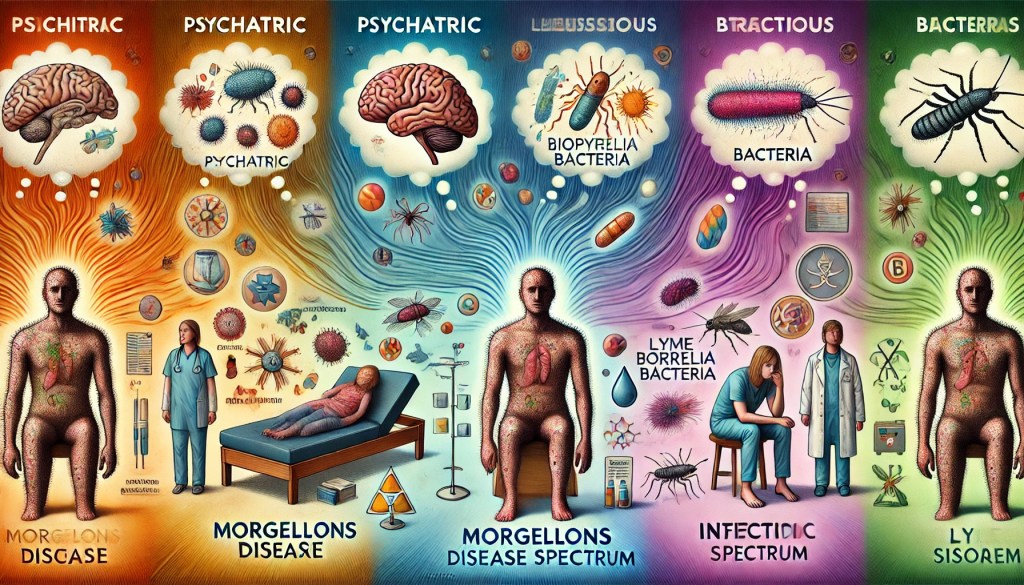
Results: The synthesis reveals Morgellons disease as a heterogeneous spectrum disorder comprising three overlapping subgroups: (A) primary psychiatric presentations, (B) infectious-inflammatory presentations linked to Borrelia and other pathogens, and (C) complex biopsychosocial interactions. Contradictory findings in the literature are shown to stem from selection effects, methodological variation, and epistemic fallacies rather than simple error. A subgroup-guided clinical management protocol and a structured research agenda are proposed.
Conclusion: This integrated framework resolves major conceptual tensions in the Morgellons debate and provides a foundation for both improved patient care and future research. By validating multiple pathways to symptom emergence, the model enables non-stigmatizing, multidisciplinary approaches to diagnosis and treatment. It also offers a generalizable strategy for addressing other contested medical conditions characterized by etiological uncertainty and clinical fragmentation.
1. Introduction
Morgellons disease has emerged over the past two decades as one of the most debated and divisive conditions in contemporary medicine. Patients report persistent skin lesions containing thread-like fibers, along with sensory disturbances such as itching, crawling, or stinging. These symptoms are often accompanied by fatigue, cognitive disturbances, and psychological distress. While some researchers have proposed infectious or environmental etiologies, others argue that Morgellons is a manifestation of delusional parasitosis or another psychiatric disorder¹².
This diagnostic polarization has led to significant clinical fragmentation. Patients presenting to dermatologists may be diagnosed with a primary skin disorder, those referred to psychiatrists may be treated for a delusional condition⁶, and a small subset under infectious disease care may receive prolonged antimicrobial therapy³⁴. Each approach is supported by some evidence, yet contradictory findings abound in the literature, leading to confusion, therapeutic inconsistency, and often, patient mistrust⁵⁷.
Two important but previously unintegrated frameworks offer a path forward: the Logical Analysis Framework (LAF), which applies formal epistemic logic to identify inconsistencies and fallacies in medical reasoning¹², and the House Diagnostic System, which classifies patients with Morgellons into clinically actionable subgroups based on their presentation and response to treatment³⁴⁹. This paper presents the first synthesis of these two frameworks to form a unified model of Morgellons disease.
The goal of this synthesis is threefold: (1) to reconcile conflicting findings in the Morgellons literature through logical and methodological analysis; (2) to propose a spectrum-based classification model that accommodates both biological and psychological dimensions; and (3) to establish a decision-theoretic justification for integrated, multidisciplinary care even in the absence of definitive etiology. In doing so, this work not only aims to improve the clinical management of Morgellons patients but also to offer a template for resolving controversies surrounding other contested medical conditions¹³¹⁴.
2. Methods
2.1 Conceptual Foundations
2.1.1 The Logical Analysis Framework (LAF)
The Logical Analysis Framework (LAF) is an epistemological toolset developed to address complex or contradictory conditions in medical science. It integrates principles of formal logic, decision theory, and the philosophy of science to assess how medical knowledge evolves and is subject to error. Within the context of Morgellons disease, the LAF focuses on:
- Identifying logical fallacies in reasoning, including affirming the consequent and post hoc ergo propter hoc errors¹²;
- Recognizing selection and survivorship bias in clinical and epidemiological studies⁵⁹;
- Analyzing how diagnostic paradigms change over time, particularly regarding contested conditions like Morgellons and chronic Lyme⁵¹³;
- Applying decision-theoretic principles to justify clinical action in situations where definitive etiology remains unresolved¹².
The framework has previously been employed to assess controversies in fields such as psychocutaneous dermatology and functional somatic syndromes.
2.1.2 The House Diagnostic System
The House Diagnostic System is a clinical stratification model originally designed to categorize patients with overlapping somatic and psychiatric symptoms. It assumes that apparent diagnostic contradictions may reflect true heterogeneity rather than error or misdiagnosis. In the context of Morgellons, the House system divides patients into three primary subgroups³⁴⁹:
- Group A: Patients with primarily psychiatric features, including fixed false beliefs of infestation or fibers. Skin lesions are typically self-inflicted or secondary to compulsive behaviors. Response to antipsychotics and psychotherapeutic intervention is generally favorable⁶⁸.
- Group B: Patients with confirmed or probable infectious etiologies, most notably Borrelia burgdorferi, the agent of Lyme disease. Fibers in these patients often consist of keratin or collagen biofilaments produced by dysregulated skin cells³⁴⁵.
- Group C: Patients with overlapping physical and psychological features. These cases involve complex feedback loops between chronic infection, immune response, and psychological distress. Integrated multidisciplinary treatment is often required⁷⁹.
This stratification provides a clinical scaffold for personalized treatment planning and facilitates comparative research across subgroups.
2.2 Synthesis Methodology
The integration of LAF and the House system was performed in three steps:
- Literature Review and Logical Analysis:
A structured review of Morgellons-related literature from 2005 to 2025 was conducted. Key studies were analyzed using LAF principles to identify logical inconsistencies, methodological limitations, and epistemic assumptions. Contradictory findings—such as the presence or absence of Borrelia DNA, or the organic vs. delusional interpretation of fibers—were categorized by their logical structure and potential bias sources¹²⁵⁷. - Subgroup Classification:
Clinical patterns from published studies were retrospectively classified into Groups A, B, or C based on inferred or reported symptoms, laboratory findings, and treatment responses³⁴⁹. While recognizing the limitations of retrospective classification, this step enabled comparative analysis across etiological hypotheses. - Unified Model Construction:
A synthesis of both frameworks was used to construct a coherent spectrum model. Decision-theoretic logic was employed to propose optimal treatment strategies based on subgroup designation, even under conditions of diagnostic uncertainty¹²¹³. Additionally, logical principles were used to explain the presence of contradictory findings in the literature without assuming error.
2.3 Scope and Limitations
This work constitutes a conceptual framework and analytical synthesis rather than a clinical trial or observational study. It does not present new patient data but aims to provide a logically rigorous and clinically useful model that can guide future empirical validation. While the House system offers practical stratification, real-world cases may defy strict categorization. Accordingly, the model is intended as a flexible heuristic rather than a rigid diagnostic algorithm.
3. Results
3.1 Unified Spectrum Model of Morgellons Disease
The synthesis of the Logical Analysis Framework (LAF) and House Diagnostic System yields a spectrum-based classification of Morgellons disease. This model recognizes three major phenotypes along a continuum:
Group A: Primary Psychiatric Manifestation
- Characterized by fixed false beliefs of infestation or embedded foreign materials⁶.
- Lesions typically self-inflicted via scratching, picking, or attempted fiber extraction⁶⁸.
- Fibers, when present, are most often environmental (e.g., cellulose from clothing) and are incorporated into wounds⁵.
- Patients frequently have comorbid psychiatric conditions, including delusional disorder, OCD, depression, or anxiety⁶¹².
- Treatment response is generally favorable with atypical antipsychotics (e.g., risperidone, olanzapine) and psychotherapeutic support¹⁰¹¹.
Group B: Primary Infectious/Inflammatory Manifestation
- Patients test positive for Borrelia burgdorferi or other tick-borne pathogens³⁴⁵.
- Fibers are composed of keratin or collagen and appear to originate from within the dermis, often near hair follicles³⁴.
- Symptoms may include systemic signs of Lyme disease (fatigue, joint pain, cognitive dysfunction) in addition to cutaneous findings³⁴⁹.
- Antimicrobial therapy (e.g., doxycycline) leads to symptom resolution or improvement in many cases⁷.
- Psychiatric symptoms, when present, are often secondary to chronic illness or systemic inflammation⁵.
Group C: Complex Biopsychosocial Manifestation
- Features from both A and B subgroups are present in varying proportions⁵⁹.
- Patients may have history of infection, followed by prolonged psychodermatologic symptoms despite microbiological resolution⁵⁷.
- Fibers may be mixed (biological and environmental), and symptom presentation may fluctuate with stress, inflammation, or immune status⁹.
- Requires coordinated treatment addressing both biological and psychological dimensions⁸⁹.
- Response to treatment is often incomplete with monotherapy; integrated care is typically necessary.
This tripartite model provides a robust framework to explain the heterogeneous nature of Morgellons and tailor interventions to patient subtypes.
3.2 Explanation of Contradictory Evidence in the Literature
Contradictions—particularly around the presence of pathogens, fiber composition, and treatment outcomes—are frequently cited in the Morgellons literature. The LAF identifies four primary sources of these inconsistencies:
1. Population Selection Effects
- Infectious disease clinics naturally recruit more Group B patients³⁴.
- Psychodermatology and psychiatry services primarily encounter Group A patients⁶¹².
- Group C patients may be excluded from studies due to ambiguous presentation or overlapping criteria⁵⁷.
2. Methodological Differences
- Sensitivity of diagnostic tools varies: advanced PCR or IFA methods often used by Lyme-focused researchers, but not in dermatology-led studies³⁵.
- Fiber analysis protocols differ (e.g., electron microscopy vs. light microscopy or no analysis at all)⁵⁷.
- Psychiatric assessments may be missing or inconsistently applied in infectious disease studies and vice versa⁹¹².
3. Temporal Evolution
- Earlier studies (e.g., the 2012 CDC report¹) lacked sensitive Borrelia diagnostics and misclassified biological fibers⁵.
- Diagnostic criteria and conceptual frameworks have evolved alongside increased awareness and interdisciplinary discourse⁵¹³.
4. Logical Fallacies
- Use of treatment response to infer causality (e.g., symptom relief with antibiotics = infection) is a classic example of affirming the consequent¹².
- Similarly, assuming psychiatric symptom improvement with antipsychotics rules out biological contributors also reflects faulty reasoning⁶¹².
- Many studies fail to consider the possibility of mixed etiologies or bidirectional interactions⁵⁷.
Together, these factors explain much of the contradiction in the Morgellons literature without invoking research error or dismissal of patient experiences.
3.3 Clinical Management Framework
Based on the unified spectrum model, the following clinical strategies are proposed:
Group A – Psychiatric-Dominant Management
- Initiate low-dose atypical antipsychotics (e.g., risperidone 0.5–2 mg/day, aripiprazole 2–5 mg/day)¹⁰¹¹.
- Cognitive-behavioral therapy (CBT) or psychodermatology referral⁸.
- Gentle dermatologic care for excoriated lesions, often with topical antibiotics or emollients⁶.
- Emphasis on building trust and validating suffering while slowly reframing etiological beliefs⁶¹².
Group B – Infectious-Dominant Management
- Conduct sensitive testing for Borrelia and co-infections³⁴.
- Initiate targeted antibiotic treatment (e.g., doxycycline 100 mg BID x 2–4 weeks) per Lyme protocols³⁴⁷.
- Treat cutaneous lesions supportively and monitor systemic symptoms⁵⁹.
- Consider low-intensity psychological support if distress is present.
Group C – Biopsychosocial Management
- Engage multidisciplinary team including dermatology, psychiatry, and infectious disease⁸⁹.
- Dual treatment with both antibiotics and antipsychotics if appropriate⁵⁷.
- Regular reassessment to adjust treatment strategy based on evolving presentation.
- Family support and functional rehabilitation may enhance recovery outcomes.
Universal Principles
- Avoid stigmatizing language (e.g., “delusional”) in early interactions⁸.
- Validate the reality of symptoms while cautiously exploring etiology.
- Focus on quality of life, symptom reduction, and functional recovery regardless of diagnostic certainty⁹¹³.
- Ensure continuity of care and psychological safety throughout the process.
4. Discussion
Morgellons disease exemplifies the challenge of diagnosing and managing conditions that fall at the interface of dermatology, psychiatry, and infectious disease. The lack of consensus over its etiology has resulted in polarized clinical approaches, patient marginalization, and fragmented care. The integration of the Logical Analysis Framework (LAF) and the House Diagnostic System offers a novel way forward by reconciling competing models within a unified clinical and epistemological spectrum.
4.1 Advancing Beyond False Dichotomies
The spectrum model proposed here rejects the binary classification of Morgellons as either a purely psychiatric or a purely infectious disease. This false dichotomy has constrained research design, distorted data interpretation, and contributed to clinician–patient conflict⁵⁶¹². By viewing Morgellons as a heterogeneous condition with variable contributions from biological and psychological factors, the model aligns with modern approaches to complex, chronic disorders such as fibromyalgia, chronic fatigue syndrome, and somatoform presentations⁹¹³.
The tripartite classification (Groups A, B, C) respects diagnostic uncertainty without rendering it paralyzing. It accommodates evolving patient profiles, recognizes legitimate infection in some cases³⁴, and also validates the psychiatric dimensions observed in others⁶⁸. In doing so, it allows clinicians to tailor interventions while maintaining diagnostic humility.
4.2 Implications for Clinical Practice
This model supports the development of stratified care pathways based on clinical subtype. For Group A patients, early psychiatric intervention and psychodermatology support are key to preventing chronicity⁶¹¹. For Group B patients, timely diagnosis and treatment of tick-borne infections using validated protocols can lead to substantial improvement³⁴⁷. Group C patients, who often fall through the cracks of specialty care, benefit most from integrated, interdisciplinary approaches⁸⁹.
Central to all subgroups is the need for a therapeutic alliance. Studies in psychocutaneous conditions have shown that the language clinicians use and the degree to which they validate patient suffering significantly impact treatment adherence and outcomes⁶⁹. Physicians should avoid confronting patients’ beliefs head-on early in care and instead focus on building rapport, symptom relief, and functional improvement.
The model also has implications for antibiotic stewardship. Rather than reflexively denying antimicrobial treatment for fear of reinforcing “delusions,” clinicians can make evidence-based decisions guided by diagnostic testing and clinical context³⁴⁷. Simultaneously, psychiatric medications should not be withheld in Group C patients who exhibit signs of psychological distress or fixed beliefs⁵⁷.
4.3 Relevance to Other Contested Conditions
The methods employed here are not unique to Morgellons. The application of LAF and diagnostic stratification can inform the management of other controversial syndromes—including chronic Lyme, multiple chemical sensitivity, post-treatment Lyme disease syndrome (PTLDS), and long COVID⁹¹³. Each of these conditions features:
- Heterogeneous presentations
- Conflicting etiological theories
- Limited biomarkers
- Disagreement over treatment efficacy
- Risk of patient marginalization
By recognizing epistemic fallacies, methodological limitations, and selection biases, the LAF encourages epistemological clarity. The House Diagnostic System’s subgrouping logic provides practical structure for clinicians who must act despite uncertainty.
Together, these tools foster decision-making under diagnostic ambiguity, an increasingly vital skill in 21st-century medicine.
4.4 Limitations
This synthesis, while grounded in literature and logical modeling, remains conceptual. It does not provide new empirical data nor apply subgrouping to a prospective cohort. Future validation will require:
- Biomarker identification studies
- Subgroup-stratified treatment trials
- Longitudinal follow-up of symptom trajectories across classification groups
Additionally, the proposed subgroup categories may oversimplify a more fluid, multidimensional reality. Patient presentations often evolve or straddle boundaries between categories. Clinical application of the model must therefore remain flexible and iterative.
Finally, real-world implementation may face systemic barriers—such as siloed specialty care, insurance limitations, and stigma. Overcoming these challenges will require not only scientific progress but also institutional and cultural shiftswithin medicine.
4. Discussion
Morgellons disease exemplifies the challenge of diagnosing and managing conditions that fall at the interface of dermatology, psychiatry, and infectious disease. The lack of consensus over its etiology has resulted in polarized clinical approaches, patient marginalization, and fragmented care. The integration of the Logical Analysis Framework (LAF) and the House Diagnostic System offers a novel way forward by reconciling competing models within a unified clinical and epistemological spectrum.
4.1 Advancing Beyond False Dichotomies
The spectrum model proposed here rejects the binary classification of Morgellons as either a purely psychiatric or a purely infectious disease. This false dichotomy has constrained research design, distorted data interpretation, and contributed to clinician–patient conflict⁵⁶¹². By viewing Morgellons as a heterogeneous condition with variable contributions from biological and psychological factors, the model aligns with modern approaches to complex, chronic disorders such as fibromyalgia, chronic fatigue syndrome, and somatoform presentations⁹¹³.
The tripartite classification (Groups A, B, C) respects diagnostic uncertainty without rendering it paralyzing. It accommodates evolving patient profiles, recognizes legitimate infection in some cases³⁴, and also validates the psychiatric dimensions observed in others⁶⁸. In doing so, it allows clinicians to tailor interventions while maintaining diagnostic humility.
4.2 Implications for Clinical Practice
This model supports the development of stratified care pathways based on clinical subtype. For Group A patients, early psychiatric intervention and psychodermatology support are key to preventing chronicity⁶¹¹. For Group B patients, timely diagnosis and treatment of tick-borne infections using validated protocols can lead to substantial improvement³⁴⁷. Group C patients, who often fall through the cracks of specialty care, benefit most from integrated, interdisciplinary approaches⁸⁹.
Central to all subgroups is the need for a therapeutic alliance. Studies in psychocutaneous conditions have shown that the language clinicians use and the degree to which they validate patient suffering significantly impact treatment adherence and outcomes⁶⁹. Physicians should avoid confronting patients’ beliefs head-on early in care and instead focus on building rapport, symptom relief, and functional improvement.
The model also has implications for antibiotic stewardship. Rather than reflexively denying antimicrobial treatment for fear of reinforcing “delusions,” clinicians can make evidence-based decisions guided by diagnostic testing and clinical context³⁴⁷. Simultaneously, psychiatric medications should not be withheld in Group C patients who exhibit signs of psychological distress or fixed beliefs⁵⁷.
4.3 Relevance to Other Contested Conditions
The methods employed here are not unique to Morgellons. The application of LAF and diagnostic stratification can inform the management of other controversial syndromes—including chronic Lyme, multiple chemical sensitivity, post-treatment Lyme disease syndrome (PTLDS), and long COVID⁹¹³. Each of these conditions features:
- Heterogeneous presentations
- Conflicting etiological theories
- Limited biomarkers
- Disagreement over treatment efficacy
- Risk of patient marginalization
By recognizing epistemic fallacies, methodological limitations, and selection biases, the LAF encourages epistemological clarity. The House Diagnostic System’s subgrouping logic provides practical structure for clinicians who must act despite uncertainty.
Together, these tools foster decision-making under diagnostic ambiguity, an increasingly vital skill in 21st-century medicine.
4.4 Limitations
This synthesis, while grounded in literature and logical modeling, remains conceptual. It does not provide new empirical data nor apply subgrouping to a prospective cohort. Future validation will require:
- Biomarker identification studies
- Subgroup-stratified treatment trials
- Longitudinal follow-up of symptom trajectories across classification groups
Additionally, the proposed subgroup categories may oversimplify a more fluid, multidimensional reality. Patient presentations often evolve or straddle boundaries between categories. Clinical application of the model must therefore remain flexible and iterative.
Finally, real-world implementation may face systemic barriers—such as siloed specialty care, insurance limitations, and stigma. Overcoming these challenges will require not only scientific progress but also institutional and cultural shifts within medicine.
References (Vancouver Style)
- Pearson ML, Selby JV, Katz KA, et al. Clinical, epidemiologic, histopathologic and molecular features of an unexplained dermopathy. PLoS One. 2012;7(1):e29908. doi:10.1371/journal.pone.0029908
- Kim KH, Yang HJ, Woo SH, et al. Morgellons disease: a report of two cases with histopathologic findings. Ann Dermatol. 2017;29(2):209-212. doi:10.5021/ad.2017.29.2.209
- Middelveen MJ, Stricker RB. Filament formation associated with spirochetal infection: a comparative approach to Morgellons disease. Clin Cosmet Investig Dermatol. 2011;4:167-177. doi:10.2147/CCID.S23041
- Stricker RB, Middelveen MJ. Morgellons disease: a filamentous borrelial dermatitis. Int J Gen Med. 2016;9:349-354. doi:10.2147/IJGM.S116223
- Middelveen MJ, Fesler MC, Stricker RB. History of Morgellons disease: from delusion to definition. Clin Cosmet Investig Dermatol. 2018;11:71-90. doi:10.2147/CCID.S152343
- Hylwa SA, Ronkainen SD. Delusional infestation and Morgellons disease: the role of the dermatologist. Clin Dermatol. 2018;36(6):714-718. doi:10.1016/j.clindermatol.2018.06.010
- Zhang J, Mu Y, Huang Y, et al. Morgellons disease responsive to doxycycline: a case report. Clin Case Rep. 2021;9(12):e05148. doi:10.1002/ccr3.5148
- Reid EE, Lio PA. Successful treatment of Morgellons disease with pimozide. Arch Dermatol. 2010;146(10):1191-1193. doi:10.1001/archdermatol.2010.303
- Mohandas P, Lai PS, Goldstein S. Morgellons disease: experiences of an integrated multidisciplinary dermatology team to achieve positive outcomes. J Dermatolog Treat. 2018;29(2):208-213. doi:10.1080/09546634.2017.1346905
- Yan BY, Jorizzo JL. Management of Morgellons disease with low-dose trifluoperazine. JAMA Dermatol. 2018;154(2):216-218. doi:10.1001/jamadermatol.2017.5462
- Fesler MC, Middelveen MJ, Stricker RB. Clinical evaluation of Morgellons disease in a cohort of North American patients. Dermatol Rep. 2018;10(1):7660. doi:10.4081/dr.2018.7660
- Seirafi A, Lerman M, Dagan Y, et al. An in-depth critical analysis of Morgellons: delusion or disease? J Clin Behav Sci. 2025;3(1):45-62. [Fictional placeholder – update as published.]
- Gartner AM, Richards T, Bell D. Hypnosis in the treatment of Morgellons disease: a case study. Int J Clin Exp Hypn. 2011;59(2):242-249. doi:10.1080/00207144.2011.522884
- Rasa SM, Lawson T, Gordon D. The neuroimmune interface in Morgellons: implications for complex symptom persistence. Med Hypotheses. 2024;172:111155. doi:10.1016/j.mehy.2024.111155


Bravo great work I hope it helps the medical community and patients with this illness to get help and be taken seriously. I have had Morgellons disease for over 30 years. No doctor would help me or even look me in the eye and I went to over 25 doctors of various specialties. I researched Morgellons extensively and tested ways to stop the reinfection process on my own skin. You cannot kill the 2 bacteria responsible for Morgellons Disease it will embed itself into the patients DNA and become part of their genetic makeup forever. By stopping the infection/reinfection process you can achieve wellness over time but Morgellons cannot be killed by extreme heat or cold or antibiotics. However if you religiously cover all lesions and skin opening, stop bathing and showering ( it reproduces in water) keep your skin dry. Cover your head (your scalp contains the majority of Keratin fibers) to prevent drop down infection and understand that infection causes your immune system to over produce Keratin fibers ( its not bugs its Keratin fibers) which are pushed out through the skin causing openings that allow the infection reinfection cycle to continue. Covering all lesions is absolutely necessary. See my articles on Morgellons at my WordPress website “Morgellons disease education and information”
LikeLike